Finally we can announce…First evidence for Julius Caesar’s invasion of Britain

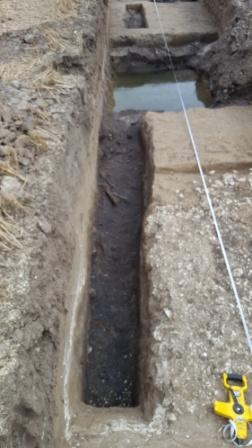
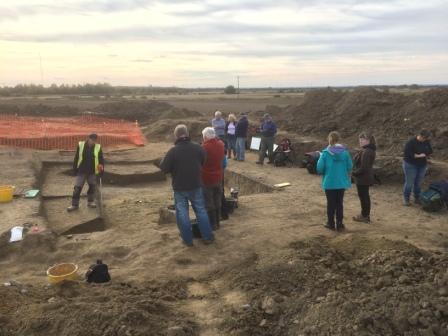
For the past three years we have been involved with the work at Ebbsfleet, Thanet, to find evidence for Julius Caesar’s first landing in Britain.

The television show ‘Digging for Britain’ aired on BBC Four last night and explored the excavation, its findings and the implications for history. For more details please click on the links below:

BBC News

Heritage Daily

The Guardian

The Times

The Telegraph

The Independent

The Sun

The Huffington Post

The Daily Mail

The Express


Posted in News & Events | Tagged , , | Leave a comment

Special finds from Cobham Big Dig 2017

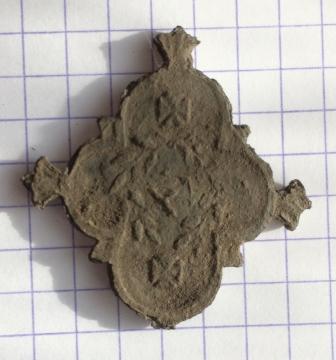
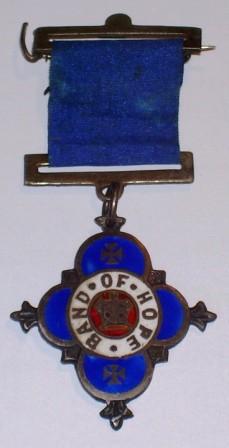
Medallion – Band for Hope


Discovered:- Pump Reservoir

The Band of Hope was first proposed by Rev. Jabez Tunnicliff, who was a Baptist Minister in Leeds, following the death in June 1847 of a young man whose life was cut short by alcohol. While working in Leeds, Tunnicliff had become an advocate for total abstinence from alcohol. In the autumn of 1847, with the help of other temperance workers, the Band of Hope was founded. Its objective was to teach children the importance and principles of sobriety and teetotalism. In 1855, a national organisation was formed amidst an explosion of Band of Hope work. Meetings were held in churches throughout the UK and included Christian teaching.

Source: Wikipedia

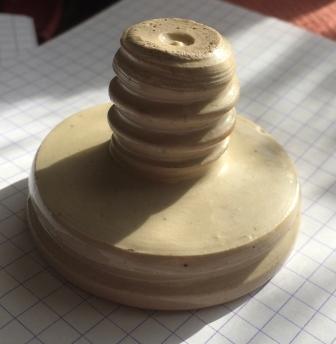
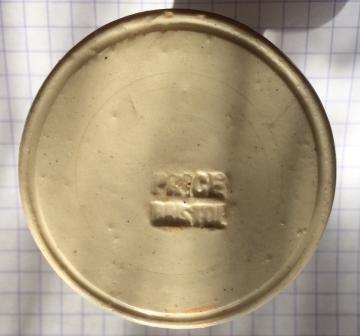
Screw top – Bristol

Powell’s and another firm, Price, were major makers of stoneware bottles and other stoneware items. Clay pipes, for smoking tobacco, were made from at least 1617 until 1921. There were also chimney pots, flower pots and sanitary wares. By the time of Queen Victoria’s death Powell’s were the second largest manufacturer of stoneware bottles in the country. They specialised in ginger beer bottles.

In 1906 the company merged with William Powell & Sons to become Price, Powell & Co.  The workshop in Redcliffe was blitzed during the war and the company never traded again.


Source: brizzlebornandbred

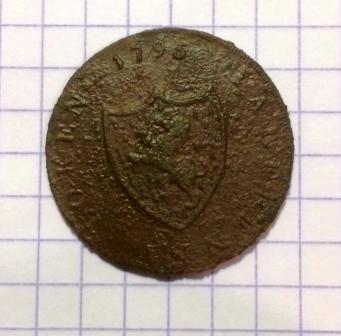
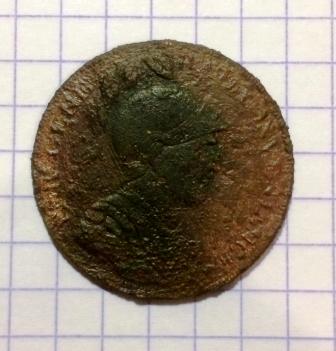
Token – 1795


Discovered:- Darnley Arms

Obverse: Helmeted bust of a bearded knight (Sir Bevois of Hampton) to the right.
Reverse: A shield of a lion rampant on a ermine background. Lettering around, date above.

Sir Bevois of Hampton seems to be a popular figure to have on obverse of a Halfpenny Tokens around the time. The reverse often depicts a shield of some description.

Sir Bevois of Hampton (alt Bevis of Southampton – c1324) is a romantic hero whose exploits include rescuing damsels in distress, fighting villains, dragons, giants etc. His adventures take him across Britain, Europe and the Near East.

Sources: https://en.numista.com/catalogue/pieces80806.html ; https://en.wikipedia.org/wiki/Bevis_of_Hampton

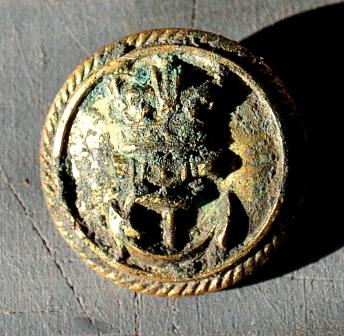
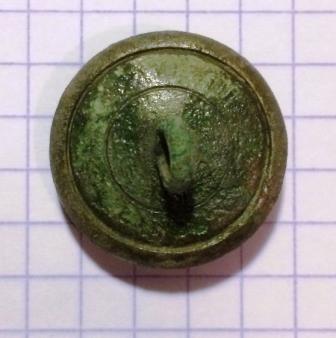
Royal Navy Button

Discovered:- Pump Reservoir

Royal Navy officers button worn during the latter part of Queen Victoria’s Reign – 1891 to 1901.

The crown represented on Naval buttons between 1891-1901 was the Queen Victoria’s Diamond Crown (1870), worn by Her Majesty during her reign (1837-1901). For the coronation of King Edward VII (1901-1910) was crowned using the Imperial State Crown. i.e. a crown that is more rounded in shape.

Source: http://www.colchestertreasurehunting.co.uk/navy%20buttons.htm

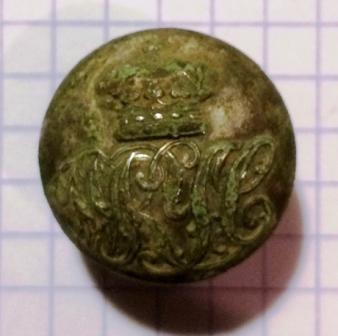
Button – West Kent Yeomanry Cavalry 1794 – 1827


Discovered:- 5 Sarsens Close

Under threat of invasion by the French Revolutionary government from 1793, and with insufficient military forces to repulse such an attack, the British government under William Pitt the Younger decided in 1794 to increase the Militia and to form corps of volunteers for the defence of the country. The mounted arm of the volunteers became known as the “Gentlemen and Yeomanry Cavalry”. In 1827 the government disbanded the Yeomanry Regiments in those districts where they had not been mobilised in the previous 10 years. The Kent Regiment was stood down and their equipment returned to the regular army. In 1830 the West Kent Regiment of Yeomanry Cavalry was reformed and in 1864 the regiment was awarded the title “Queen’s Own” and became known as the West Kent Regiment of Yeomanry Cavalry (Queen’s Own).

The Cobham Yeomanry was set up in 1794 and from 1838 it existed as a unit within the West Kent Yeomanry Cavalry. In 1907 the Territorial Army (TA) was formed and the system of the yeomanry ended. The Cobham Yeomanry were then fully absorbed into the West Kent Yeomanry.

Source: https://en.wikipedia.org/wiki/Queen%27s_Own_West_Kent_Yeomanry ; https://www.revolvy.com/main/index.php?s=West%20Kent%20Yeomanry%20(Queen’s%20Own)&item_type=topic ; Medway Archives – U565/023-025  1821-1905

(Article by Don Blackburn, updated March 2020.)

Posted in News & Events | Tagged , , , | Leave a comment

Betty Grayland: memories of Shorne Woods

Early days

I was six weeks old in 1928 when we moved to Shorne, my father, Albert Swaisland, worked for the village baker and we lived on the premises, the bakery was at the rear of the shop and was where No. 17 The Street now is. We moved to Pear Tree Lane in 1945 to run a dairy farm after he had to leave the bakers due to ill health caused by the accumulated damage that working with flour had done.

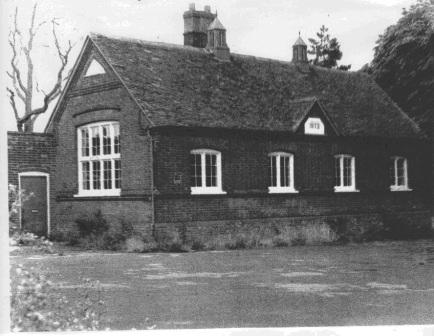
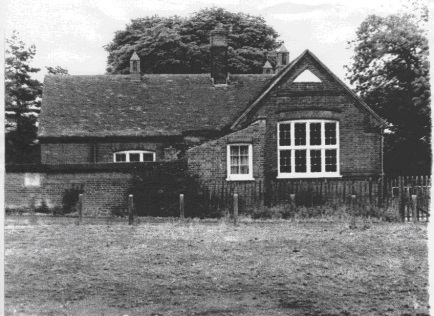
I started school at the age of five, the school was built in 1872. There were seven boys living next door to us and I soon became one of their ‘gang’ and spent many hours exploring in the woods. The Shorne/Ifield Road side of the woods was very dense. The Carriage Way came out of the woods next to Baynards Cottage at Hartshill on that road. The wheel ruts were still visible when we used to go there. It used to go all the way to Brewers Gate at one time but that was before the clay extraction took place.
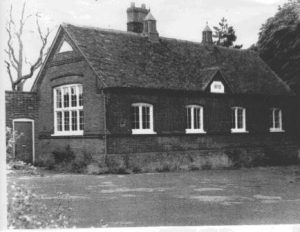
Shorne School, Mill Hill Lane
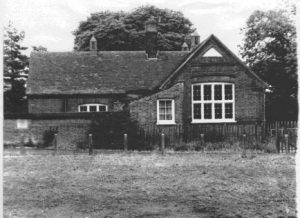
Shorne School, Mill Hill Lane

I can remember being taken to see Randall Manor in the late 1930’s, I think this was possibly at Lord Darnley’s invitation as he was a School Governor and visited the school regularly, especially for celebration days and PE demonstrations, this finished after the war started. During the war  we had to share the school with the evacuees which meant we only went for half days, mornings one week and afternoons the next.

The ‘Crows Nest’ was built by Lady Darnley near Harts Hill, which had a clear view of the river, so that she could see her son, Ivo Bligh, set sail from Tilbury on his way to Australia to play cricket for the ‘Ashes’.

The army moves in

The army moved into Shorne in 1941, first the Royal Artillery arrived and then the Durham Light Infantry, together they commandeered the village. Several houses were taken over by the army, The Woodlands and Munilly in Woodlands Lane and also some houses in Pondsfield Lane that had just been built and were still empty were used by both Canadian and British Army officers. The brick road into the woods, from Woodlands Lane, was put down by the army, it went quite a way into the woods but I don’t know how far as we were never allowed in there. The concrete road into the woods from Brewers Road was laid there by the clay works people.

The army boys became the life and soul of the village holding dances in the village hall and their band played Sunday mornings, near the Rose & Crown, after church service. On one Sunday morning their mascot, a big white goat escaped and chased my mother but luckily it didn’t catch her. Our house was always open house for all the service men, my father would often bring men back with him for supper after he had been to the pub.

The NAAFI was in a tent on ‘The Common’, we were taken there for film shows and given bars of chocolate by the soldiers. One night some soldiers dared me to go round the churchyard, they didn’t think I would do it but when I did they gave me a pound for doing it.

Apart the chocolate given to us by the soldiers we were also occasionally given venison by the village policeman, I think he must have been the local poacher, or at least known who it was and kept quiet for some of his ill gotten gains.

A really large area of the woods along both sides of Brewers Road as well as on the west side of Woodland Lane was full of both big brown bell and ridge tents, I’ve always understood that there may have been up to 500 soldiers living in the camp but I can’t be sure of the figure.

There weren’t many bombs that landed in Shorne but one fell in Brewers Road and one by the school in Mill Hill Lane.  There wasn’t any restriction on local travel but when we went to Strood we had to show our Identity Cards as there was a barrier across the road at the Coach  & Horses pub at the top of Strood Hill.

There was a searchlight on Mill Hill where there is still an indentation in the ground where it was and the base for the machine gun is also still there. There was also mobile anti-aircraft guns mounted on the back of lorries parked by the Rose & Crown that would be used where they were needed when there was an air raid on, the Mill Hill searchlight would show them where the planes were.

We slept in the cellar of the bakery shop during the war, we did have a Morrison shelter but that filled an entire room and my father said we weren’t going to have that and that we would sleep on the cellar. We had mattresses on the boxes of emergency rations that were stored in the cellar in case of the village being cut off. There were usually about 7 or 8 of us sleeping there, including 3 or 4 evacuees from Strood. I’m not sure but I think it would have been the Air Raid warden’s responsibility to hand out the rations if the occasion arose but luckily they were never needed.

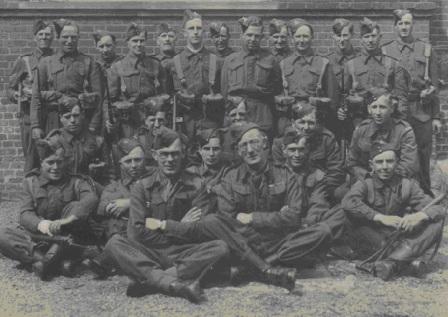
Both my father and husband were in the Home Guard and their duties were to guard the radio stations at both Boghurst Cottage and Ashenbank Wood. I can remember the radio tower at Boghurst Cottage, it looked very much like an electricity pylon with antennae on the top. I remember it being quite tall as it could be seen above the tops of the tallest trees. The concrete radio station building at Boghurst Cottage was used as a scout hut after the war; it wasn’t very big, perhaps 12 feet long and 10 feet wide. It was eventually pulled down when Brewers Road was re-routed.
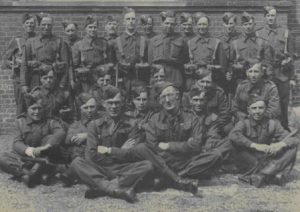
Photograph of the Shorne Home Guard

Names in the photo above include:

???        M.Carcary     ???        R.Bone  H.Wallace  D.Grayland   Kavanagh

???        A.Swaisland  S.Clark  C.Chandler  D.Carcary     ???

P.Rye           S.Cooper         C.Wallace      J.Botting       C.Smith

F.Scaggs      C.Dawes         R.Miles              C.White         H.Dawes

E.Carpenter       H.Davys

[Nothing to do with any of the above but the triangle of land bounded by The Ridgeway, the track that ran from the Ridgeway to Woodlands Lane and Woodlands Lane was called ‘The Whence’, why I’ve no idea and is now known locally as ‘Common Rough’ – a whence is the name for a junction.]
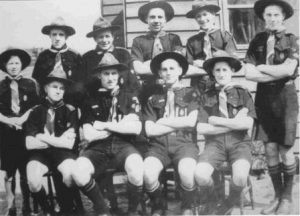
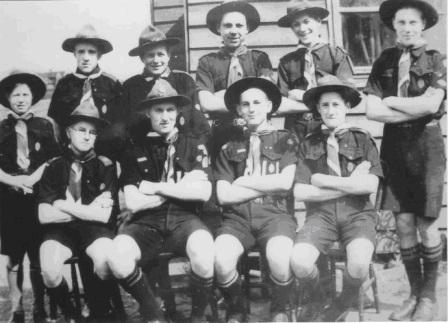
1st Shorne 26th Gravesend Scout Troup c.1943

Names in the photo above include:

Victor Excell     Bob Dockrell     Reg Rootes     Ted Vaughan

Dennis Smith                                                                                            Derek Grayland

John Webb      Doug Grayland     Les Webb     Stan Excell

(As told to Trevor Bent in 2010.)
Posted in Oral History | Tagged , | 6 Comments

Fort Amherst dig October 2017

We are starting work at Fort Amherst this week, running through to Saturday the 14th and then from Monday 16th to Saturday 21stOctober.

Please go straight to Fort Amherst for a 10am start. There is plenty of parking on site, through a locked gate that we will open at 10am each day! Car sharing from Shorne where possible!

Head for Fort Amherst, Khartoum Road, Chatham ME4 4UB and use the attached map to meet us at the tunnel each day! X marks the spot!

We will work 10am to 4pm days, weather willing…there are facilities on site and we are right next to Chatham town centre.

This will probably be our last excavation project of the year, so do come along, even if it is just for a visit

Posted in News & Events | Tagged | Leave a comment

Jack Hollis: memories of Ashenbank and Shorne Woods

The family and Ashenbank Camp

My Mum was born in Glyncorrwg Wales, and Dad was born  in Houghton-Le-Spring County Durham. I was born in Chesterfield, Derbyshire on the 26th September 1944. I have an elder Brother Ray and four Sisters, Eunice, Rita, Linda and Sandra. After the war, with Mum and Dad’s approval, Ray was naturally adopted by Auntie Dora and Uncle Len they migrated back to Guernsey, Uncle Len’s birth place.

Mum, Dad, my elder sister Eunice and myself lived for a while in Lynton road South Gravesend, we then moved in to a disused RAF camp in Ashenbank woods, the hut had been Officers Quarters when the RAF were billeted there. I have been told that we were the first squatters on the camp but I can’t confirm it, our address was 34 Laughing Waters Cobham Kent. In later years my three younger sisters were born while we lived there.

It was a single storey wooden hut with a tarred felt roof, the inside was painted cream and there was brown lino on the floor. I can’t quite remember the layout of the building but there was a passageway along the centre of the building with three rooms on either side of it. Looking at the hut from the front, the kitchen was on the left, the living room was next, I can’t remember the third room at the front but the three rooms at the back were bedrooms. I can remember my dad building a bed out of timber that he brought home from work.

Unlike most of the buildings that had to share toilet blocks, we had our own toilet a short distance from the hut [to the left of the tree in the photo ]. There was no bathroom but we had a tin bath which was filled from water boiled on the Kitchener.

34 Laughing Waters Cobham Kent

34 Laughing Waters Cobham Kent

Life in the area

When I started at Cobham Primary School I caught the bus at Shepherds Gate into Cobham village. Mr Aldridge was the headmaster of the school, a very stern Yorkshire man. He is the only teacher that I can remember the name of. Mum would use the bus for her shopping trips to Gravesend. It went via Halfpence Lane, the Tollgate and on into Gravesend.

There was a general store on the site, which had probably been the NAAFI building as it didn’t look like the rest of the huts. We could also go into Ganders general store in Cobham village.

Mum worked for Lord Darnley as a domestic in Cobham Hall and at Scalers Hill House. As a family we would gather sack loads of Chestnuts, which I assume Lord Darnley sold. Mum also worked at some time at the Laughing Waters Restaurant just off the A2, it is now known as the Inn on the Lake. Dad turned his hand to various jobs including as a Blacksmith and window cleaning. We also helped as beaters for pheasant shoots on the estate.

I don’t remember many names from the camp except for the Tovey family who lived next door to us, they had a daughter Susan that my sisters played with, also there were The Murrells on Camp site 5 and the Coleman family who lived in the area of hut number 40/42 (Mr Coleman was a coalman!).

Entertainment

There were no playgrounds in the camp, nothing put on for the children so we had to make our own entertainment, except for the Christmas party at the Meadow Rooms in Cobham village, and the occasional film show in the loft of the village bakery – that was quite an exciting event.

Inside Shepherds Gate there was a thatched roof cottage with a large barn. We played in the barn on bales of hay and old farm machinery that were stored there. nother place was the Brick Kiln ponds, one winter when the ice was so thick we were jumping up and down trying to break it, luckily we didn’t, or we might not be here now.

We used to watch the Blacksmiths in Cobham village shoeing the horses while waiting for the bus home from school, occasionally we used to go to the bakers for a ‘penny bag of stales’, in those days they used to be able to sell stale cakes! Blackberry picking at Scalers Hill was another summer pastime.

Sports car and motorcycle time trials were held, starting in large silver sand hollow near the bridge that now crosses the A2 to Thong lane. The motorcycles and cars would scramble up steep inclines sometimes not making it to the top, down steep banks and through muddy water filled ditches on to roads at speed through the woods. Being mischievous children we took great delight in turning round the marker flags.

There used to be a tea wagon parked on the A2 where lorries pulled in for a break, and at weekends coaches would pull in for a halfway stop on their way to the coast, they would get out crates of beer and food and have a jolly good booze up.

On the left hand side of a lane leading downhill from Brewers Gate to the golf club (probably the Old Roman Road) there was a high sand bank where Sand Martins nested and a stream with watercress growing in it on the right hand side. Further in the woods towards Cobham Hall I recall a sunken white tiled area, possibly the area marked on the Ordnance Survey map as fish pond.  When the A2 was widened in 1960, I wasn’t surprised to hear that there were problems with subsidence in this area due to the sandy banks.

We probably moved out of the camp in 1955/6, confirmed by a family postcard dated 21.3.55 with 34, Laughing Waters as the senders address and also a medical certificate for my sister Rita from  Northcote Primary school dated 21.6.56.

We were offered a new house in Higham but we didn’t take up the offer. With my father being in and out of work it may have been too expensive and moved to Shamrock Road in Denton instead.

One of my main playgrounds was the clay works in what is now Shorne Country Park but that’s another story.

Jack talks about the clay pits in Shorne Woods

I have fond memories of my sisters and friends playing in the clay works on the other side of the A2, now known as Shorne Country Park. We used to watch the big digger load buckets full of clay onto the rubber conveyor belts that ran on two short V shaped upright rollers and one wide flat one underneath to move the belt. There were large gaps between the clay on the conveyors while the digger dug the next load so we used to jump on the belt for a ride but were often chased off by an employee. The belt ran right across the clay pit from the Brewers Road end to the slurry tank near the A2.

From another part where clay was dug there was a small narrow gauge railway track with an incline up to a large hopper. The engine was possibly a coal fired box shape. It hauled V shaped wagons which had a central pivot up the incline and they could tip either way up into the hopper, where they were tipped out to a fleet of open back lorries waiting below. I think each wagon load was one lorry load. They were then transported off possibly to Aylesford.

When work finished for the day we would play on the tipper wagons rocking them from side to side. I also recall helping ourselves to coal from a large heap that was used to fire the engine. In the summer months we had hours of fun playing in the rain water pools that were only waist deep.

I recall a wide gravel path on the Shorne side of the A2 between Camp 2 and the Clay works going through Shorne Woods, leading down to a gatehouse at Thong Lodge. The path had iron bar fencing each side typically found on the Darnley Estate, there were red, yellow, white and pink rhododendrons growing on either side of the fencing.

(As told to Trevor Bent in 2017.)

Posted in Oral History | Tagged , | 4 Comments