
Otto Bagi
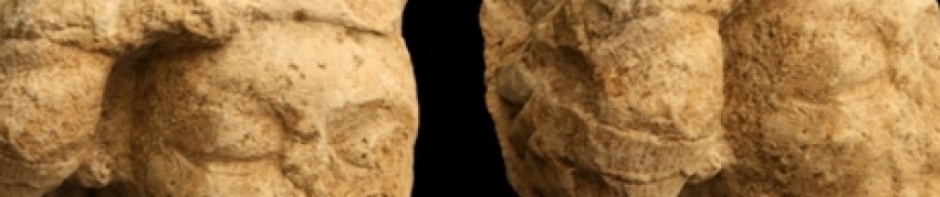
In October Otto Bagi came to Shorne to use photogrammerty techniques on a couple of our more fragile artefacts. His preliminary results are now in. Take a look yourself by clicking on the links below…

Otto Bagi
In October Otto Bagi came to Shorne to use photogrammerty techniques on a couple of our more fragile artefacts. His preliminary results are now in. Take a look yourself by clicking on the links below…
Today the Ceramic Building Materials workshop was held at Shorne Woods Country Park. It was led by Ian Betts from the Museum of London Archaeology.
The event was well attended, with individuals from SWAG itself, the Kent Archaeological Society, the Historical Research Group of Sittingbourne, Cliffe and Hoo Historical Society, the West Kent Archaeological Society and the Maidstone Area Archaeological Group.

Andrew Mayfield and Ian Betts
Ian gave a run down on the history of CBM focusing on London and the South-East. He covered both the Medieval and Post-Medieval period looking mainly at roof tile, floor tile, wall tile and brick.
Many of the attending groups bought in samples from their digs and Ian took a look at all the pieces, giving comment as he went along. Sites covered included Randall Manor, Bredhurst, Scotgrove and All Saints, Hartley.
Thank-you Ian.

Samples from Hartley

Samples from Bredhurst

Attention all
The Hoo Peninsula, located on the north Kent coast 30 miles east of central London, extends into the Thames Estuary between Gravesend and Rochester.
The peninsula lies in the local authority areas of Medway and Gravesham and is bounded by the River Thames to the north and west and the River Medway to the east. It is home to just over 31,000 inhabitants with settlements varying in size from over 7000 residents to just a few hundred.
Between 2009 and 2012 English Heritage carried out the Hoo Peninsula Historic Landscape Project. The project aimed to increase knowledge and understanding of the historic environment of the Hoo Peninsula, capturing how its history and archaeology contributed to the character of the modern landscape, including the estuarine and marine environments.
Proximity to London and the Medway Towns has increased pressure on the peninsula’s land use, in the form of housing, economic and infrastructure developments. Like all landscapes, it is also subject to environmental change. It is hoped that the project results will provide an improved basis for management and decision-making and enable the historic environment to fully inform the strategic decisions that will shape future change on the Hoo Peninsula in the coming decades.
A variety of approaches were used to analyse the peninsula’s landscape. These included:
For a closer look at the Project go to the Historic England’s website.
Andrew will be trying to arrange two free finds conservation workshops with Dana Goodburn-Brown, courtesy of a Kent Archaeological Society Grant. These are small group sessions, so register your interest now! More details to follow.
Likewise we have a number of free pottery workshops pencilled in for March 2016, with our dear friend Nigel Macpherson Grant…again more details to follow!
In the spring of 2015 the Heritage Lottery gave Kent County Council funding for the Woodland Wildlife Hidden Histories Project. This enabled community archaeology to be undertaken at Rose Hill, Sittingbourne. Those involved included Grove Park Primary School, the North Downs Young Archaeologists Club, the Historic Research Group Sittingbourne and Shorne Woods Archaeology Group.
As part of the Project an initial two evaluation days looked at garden features and identified the walled garden at the house site along with a number of outbuildings. Initial excavation work was also carried out on a substantial outbuilding at the rear of the house. By the end of this day the YACs confirmed that part of the brick floor remained intact. Finds recovered included pottery and metal objects covering a chronology from c.1800 AD to the late 20th century.
From the 15th to the 18th June the Project performed further excavations. By the end of the period a number of phases had been established for the buildings – from a laid brick floor to concrete skimmed yard probably used as a garage for storage. Finds included bricks, metalwork, pottery, bone, shell, tiles and worked flint.
For more detail on the social history of the house at Rose Hill click here.
Bibliography: