Cobham Landscape Detectives

Cobham Landscape Detectives Project wins Heritage Lottery Fund support

The history of Cobham will be unearthed and brought back to life with a three-year archaeology project. Kent County Council has secured a grant of £96,000 from the Heritage Lottery Fund for the project, Cobham Landscape Detectives.

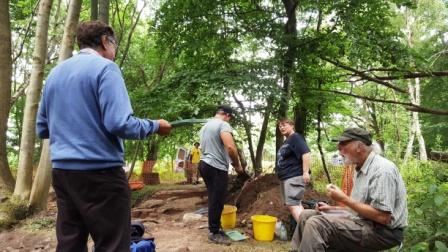
It will be led by a community archaeologist in partnership with local volunteers. Activities will include:
• exploring the wooded landscape to identify ancient trees and hidden earthworks
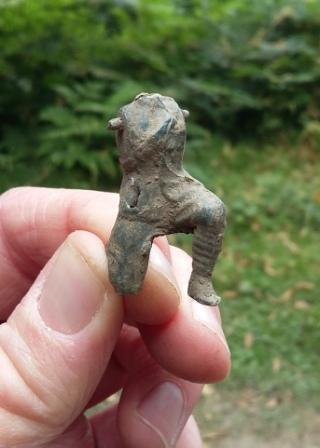
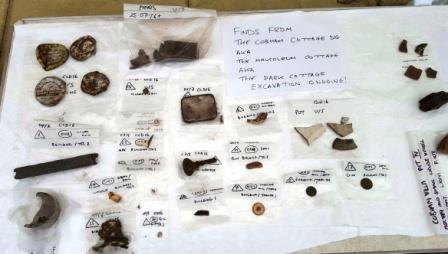
• fieldwalking to look for archaeological finds that give a clue to past land use
• geophysical surveys to discover buried remains
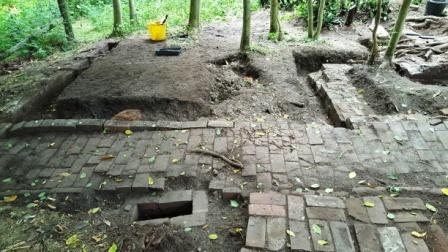
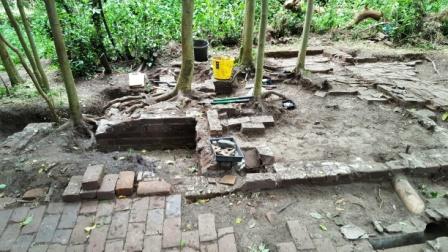
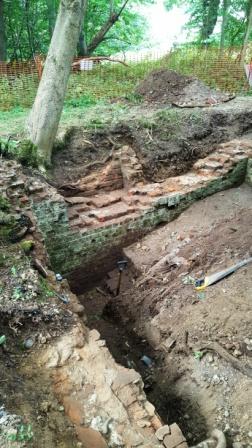
• small-scale excavations to test detective work

The information gathered will help tell the story of the changing landscape from prehistory to the present day.

People of all ages and abilities are invited to get involved and become Cobham Landscape Detectives. The project will work with community, groups, local schools and the Kent branches of the Young Archaeologists Club.

Results will be presented to the public through a series of walks, talks, open days, on the web and through social media. A richly-illustrated final report will detail the findings. Kent County Council is well-known for running successful and engaging community archaeological projects.

Previous projects, including Shorne Woods Heritage Project and the Shorne HubCAP project, have worked with a wide range of volunteers, offering unique opportunities to explore the archaeology of a range of sites across west Kent.

KCC Cabinet Member for Environment and Transport Matthew Balfour said:

“This will be a great learning experience for the residents of Cobham as well as those taking part. In the past, people taking part have not only learnt important archaeological skills, but been able to talk about their new-found knowledge to the community at a wide range of events, involving thousands of people. The landscape around Cobham is a treasure trove of archaeological sites of all periods, from still standing prehistoric earthworks to buried Roman villas and from lost medieval manors to world war two camps”.

The Cobham Landscape Detectives project which is working in partnership with major land managers in the area such as the National Trust, Forestry Commission, Plantlife International and the Woodland Trust, will provide opportunities to explore these sites further and present the results to the public.

Stuart McLeod, head of HLF South East, said:

“From listed buildings and ancient monuments to 17th century woodland and literary connections, Cobham and the surrounding area has a rich and diverse heritage. Thanks to National Lottery players, this project provides a wonderful opportunity for people to delve into their local heritage and we’re delighted to award this grant so that the volunteers can begin their journey of discovery.”

Cross-post from Kent.gov.uk


Posted in News & Events | Tagged , , , , , | 5 Comments

Nellie Dodd: memories of Cobham

Earlier life

I was born in the yard of the Pelican pub in Strood and was always told that a zeppelin going over brought on my mothers labour and hence my unexpected birth. My birth certificate confirms my place of birth.

My father was a regular soldier and consequently we moved around England in various army camps and ended up in Chatham where I worked for Shorts. I joined the army in 1938, following in my fathers footsteps and served until 1943 when, with the birth of my son I was discharged.

During the war I became a sergeant and my duties,  until  the  war ended, were  to  take rations, by lorry,  to the gun  sites all round Kent. The main distribution centre was at Southill RASC on the  Maidstone Road  in Chatham.

Nellie Dodd

“The photograph shows me in 1940, in my ATS uniform”

After I lost my husband, who was killed at Arnhem, I went to live with my parents in Leicester.

Moving to Cobham Woods

I really wanted to come back to Kent so went to stay with a friend in Wainscott. I re-married another soldier, Jo Dodd and applied for a council house, there were very few available but we were offered a place in a hut at what had previously been a WWII air force camp in Cobham Woods and moved in around 1947–48 eventually moving out in 1953. Our rent for the hut was 8 shillings a week, our rent for or brand new council house 23 shillings a week.

We didn’t really know what the accommodation was going to be like when we accepted the councils offer but all in all it turned out to be relatively comfortable. The worst aspect was that the washing and toilet facilities were in a separate block and shared by between 4 to 6 huts. We had to make a rota so that everybody knew when the facilities were available to them and we also all had to take our share of the cleaning duties.

The hut was completely empty, except for the range, when we arrived so we had to find our own furniture, we managed to buy most of ours from Whites storeroom, which was next to Wingetts, I was able to do this with some finacial help from my Dad.

There was electricity for heating  and one small electric plate to cook on but no gas. Most of the cooking had to be done on the wood burning range. We weren’t really supposed to collect wood, even though the site was in the woods.  Lord Darnley, the landowner, didn’t approve but we were lucky that the gamekeeper looked the other way when we went to collect some. A lot of the trees in the woods were Chestnut so in the autumn we were able to collect the chestnuts and cook them on top of the range.

The range had a water tank on the side so we had hot water when we needed it. This meant we could bring the tin bath in and have a bath in front of the heat from the range. This was very nice in the winter but in the summer we still had to have a fire if we wanted hot water.

Life on site

There were good roads round the whole site with pathways leading off  to each hut. The huts were of a wooden construction with the whole building, not just the roof,  covered with roofing felt. When you went into the hut there was a passage that went all the way through into one very large room, we put up our own partitions and divided the hut into two large and two small rooms, much more like a home. The internal walls were made of plasterboard and the décor was typical army, brown lino, dark brown paint on the bottom half of the wall with a light top half. Some of the huts were damp but we were lucky, No. 54, our hut, had no problems as we were on a slope which meant any rain water ran away down the slope.

Most people kept their huts nice and tidy and some people tried to make their own gardens but the rhododendrons were a problem, as not much would grow, so we just had a small rockery.

We would often hear deer crashing about at night but it was never a problem and once we knew what it was we got used to quite quickly.

There were big air raid shelters on the site and the children loved playing in them, the whole site being their playground for, nice and safe with not many cars around.

There was an hourly bus service from Halfpence Lane but I rarely used it as I rode my bike and took my son to nursery and later to school, in a seat on the back, and then cycled to work in Strood. Firstly at Goodworths Greengrocers and then at Wingetts, as a canteen cashier. Many times in the winter I had to walk when I couldn’t cycle because of the snow. One of the perks of the job was that I was given food and the cooks made up dinners for the weekend for me.

There was a general store on the site where we were able to buy most of  our basic provisions and the milkman came round with his horse and two wheel cart, we had to take our jugs out, there was no bottled milk available then.

The Re-housing committee

Dodd archive page 11 comp

We had a community room in one of the huts where we had weekly dances, everybody joined in bringing food for the evening, occasionally we had live music but usually it was records. The room was also used for meetings and also to meet with councilors to discuss our problems and when our re-housing would take place. There was one person, Farmer Lawrence, who was fantastic at meetings and would rattle the councilors when we needed repairs doing etc.

We all put a bit of money in and formed a site committee to buy a typewriter, stamps and stationery etc. so that we were able to write to different people to pressure them about our re-housing. We formed a committee with me and Jo, the Duffs and the Pearces and we became the driving force in our re-housing battles. One of the committee members, Mrs Sutton, our media correspondent, helped a great deal by ensuring that everything that happened was printed in the local papers

We were helped by Richard Ackland, the local MP, who took up our case in the Houses of Parliament and I’ve no doubt he helped in hurry things along.

My husband Jo oversaw everybody leaving the camp to be re-housed, there were 50 families all together.  Ten were re-housed in Gravesend, one in Northfleet and the rest in Higham. The last families to leave the camp were finally re-housed in 1954.

As told to Trevor Bent (a member of Shorne Woods Heritage Group) in March 2010. Laughing Waters was located on the site of the ‘Inn on the Lake’.

Posted in Oral History | Tagged , , , | 2 Comments

LiDAR online

At SWAG we have a strong interest in all things LiDAR. If you feel the same way then you’ll want to take a look at the Open Data Maps website: http://enfarchsoc.org/opendata/

open maps data

Details about the site

  • OpenStreetMap is built by a community of mappers that contribute and maintain data about roads, trails, cafés, railway stations, and much more, all over the world
  • OpenStreetMap emphasizes local knowledge. Contributors use aerial imagery, GPS devices, and low-tech field maps to verify that OSM is accurate and up to date
  • OpenStreetMap’s community is diverse, passionate, and growing every day. Our contributors include enthusiast mappers, GIS professionals, engineers running the OSM servers, humanitarians mapping disaster-affected areas, and many more. To learn more about the community, see the user diaries, community blogs, and the OSM Foundation website
  • OpenStreetMap is open data: you are free to use it for any purpose as long as you credit OpenStreetMap and its contributors. If you alter or build upon the data in certain ways, you may distribute the result only under the same licence. See the Copyright and License page for details
  • Hosting is supported by the UCL VR Centre, Imperial College London and Bytemark Hosting, and other partners
Posted in News & Events | Tagged , | Leave a comment

YAC dig this Sunday

Young Archaeologists Club dig

Shorne Woods Country Park this Sunday (13th March 2016).

Session starts at 10am and goes through until 12:30.

Posted in News & Events | Tagged , , | Leave a comment

Isle of Thanet Archaeological Society’s 2016 Lecture Programme

IOTAS Archaeological Studies Lecture Course 2016

  • 14 Mar 2016: ‘Not Angles but Angels’: St Augustine and the ‘conversion’ of Kent
  • 04 Apr 2016: Rings and Roundabouts:  The Lord of the Manor Ceremonial Landscape – a history and analysis of the excavations
  • 09 May 2016: Before the Flood: The Archaeology of the Palaeolithic, Mesolithic and the lost North Sea Lands.
  • 13 June 2016: ‘The Heathen of the Seas’: Vikings in Thanet?
  • 11 July 2016: Saxon Shores – environmental changes and historical arrivals: an overview of the SE coastline from late Roman to late Medieval times
  • 12 Sept 2016: Richborough Roman Fort – The Gateway to Roman Britain?
  • 10 Oct 2016: Beowulf – fact or fantasy?
  • 14 Nov 2016: Skyscapes and Landscapes: A new interpretation of Stonehenge

Continue reading

Posted in News & Events | Tagged , , , , , , | Leave a comment